
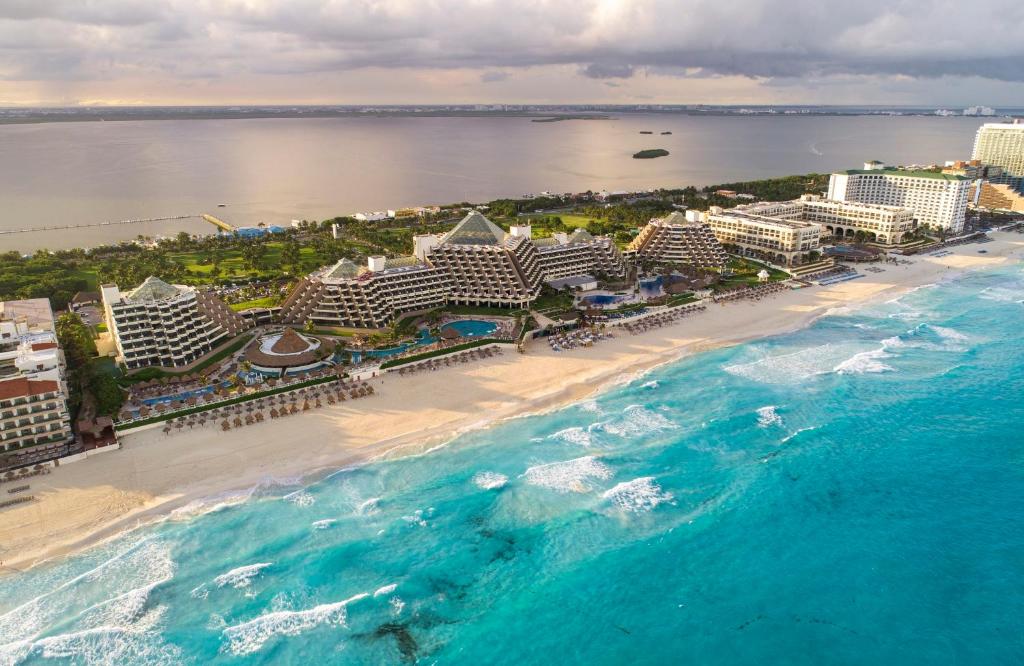
Cancún is a coastal city in the state of Quintana Roo, in the northeast of the Yucatán Peninsula, facing the Caribbean Sea. Known worldwide for its white-sand beaches and turquoise waters, it combines a modern Hotel Zone laid out along a “7”-shaped island with a Mexican Downtown full of markets, parks, and local life. It began as a tourism development project in the 1970s and today is one of Latin America’s most visited destinations for its blend of sun and beach, Maya culture, cenotes, reefs, and vibrant nightlife.

Where it is and how it’s organized
Cancún is located at the northern end of Mexico’s Caribbean. The city is divided into two main areas:
- Hotel Zone (Zona Hotelera): a corridor of approximately 22 km with hotels, resorts, shopping centers, restaurants, clubs, and access to the destination’s main beaches. To the north is Punta Cancún (lively vibe, bars and nightclubs) and to the south Punta Nizuc (quieter atmosphere, natural areas, and reefs).
- Downtown Cancún (Centro): the local heart. Here you’ll find markets such as 23 and 28, parks, casual eateries, and transportation to other cities in the region.
Alongside it, Nichupté Lagoon provides mangroves and channels ideal for boat rides and nature activities.
Brief history and development
Although the area has been inhabited by Maya communities since ancient times, modern Cancún began as a tourism development project promoted by the federal government and financial institutions in the late 1960s and early 1970s. The island of Cancún had virtually no population when the works began; the city grew around tourism and service activities.
What makes Cancún unique
- Iconic Caribbean beaches. Light coral-based sand, sea shades from blue to turquoise, and multiple public access points.
- Close to Maya culture. From Cancún it’s easy to visit Chichén Itzá, Tulum, Cobá, or the Maya Museum of Cancún with the San Miguelito archaeological site.
- Nature and adventure. Cenotes (freshwater sinkholes), reefs for snorkeling and diving, and the MUSA (Underwater Museum of Art) with submerged sculptures that foster marine life.
- Nightlife and gastronomy. Bars, clubs, shows, and international cuisine alongside local seafood and street-food favorites.
- Air connectivity. Cancún International Airport (CUN) offers direct flights from cities across the Americas and Europe, making it easy to combine short stays with Riviera Maya trips.
Notable areas and beaches
- Playa Delfines: famous lookout and surf from moderate to strong depending on the season.
- Playa Tortugas and Caracol: calmer waters to the north, ideal for families.
- Playa Chac Mool and Fórum: close to the nightlife scene in Punta Cancún.
- Punta Nizuc: reef areas suitable for snorkeling (regulated access).
In Downtown, local life thrives in markets, parks, and sports courts; it’s a good spot for local-price dining and for catching transportation to other cities.
Maya culture and nearby excursions
- Chichén Itzá: one of the New Seven Wonders of the World, ~2.5–3 hours away.
- Tulum: seaside archaeological zone, ~1.5–2 hours away.
- Cobá: pyramids in the jungle, ~2–2.5 hours away.
- Isla Mujeres: minutes away by ferry; excellent snorkeling and island vibe.
- Cenotes along the Route of the Cenotes (Puerto Morelos) and adventure parks with underground rivers and zip lines.
How to get there and get around
- Arrivals: CUN is Mexico’s second-busiest airport, with a wide offering of international flights.
- Transfers: options include private transportation, authorized taxis, buses (such as ADO to other cities), and car rental.
- Within the Hotel Zone: a main boulevard (Kukulcán) makes it easy to move by local bus or car.
- Regional visits: to explore cenotes and ruins, consider organized tours or private transfers if you prefer not to drive.
Climate and best time to go
Cancún has a tropical climate with warm weather year-round. The driest period with lower humidity usually runs from December to April; from June to November is the rainy and hurricane season in the Atlantic (not every year brings impacts, but it’s wise to monitor forecasts). The sea stays warm most of the year.
Lodging and nightlife
- All-inclusive resorts on the beach, boutique hotels, and family properties dominate the Hotel Zone.
- In Downtown you’ll find hotels, hostels, and apartments with a more local feel and varied budgets.
- Nightlife: shows, bars, and clubs in Punta Cancún; there are also cultural performances and themed dinners.
Responsible nature
Reefs and mangroves are fragile. Use biodegradable sunscreen, respect buoys, avoid touching corals, and follow local guidelines. In protected areas, access may be regulated.
Quick tips
- Cash: the currency is the Mexican peso; many businesses accept cards.
- Public transport: buses in the Hotel Zone run frequently; for regional trips there are intercity buses and tours.
- Safety: tourist areas have staff presence and surveillance; use common sense as in any large city.
- Book ahead in peak season for popular activities (MUSA, parks, ferries).
Frequently asked questions
Is Cancún a city or just a beach?
It’s both: a city with local life and an insular Hotel Zone packed with beaches, hotels, and attractions.
Why is Cancún famous?
For its Caribbean beaches, nightlife, proximity to Maya ruins and cenotes, and its tourism infrastructure.
Where is it better to stay: the Hotel Zone or Downtown?
The Hotel Zone offers direct beach access and tourist services; Downtown provides more local prices and connections to regional transportation.
Can you snorkel or dive?
Yes. There are nearby reefs, tours to Isla Mujeres, and the MUSA with underwater sculptures.
What’s the best time to go?
From December to April there’s usually less rain and lower humidity; the rest of the year is warmer with a chance of showers.
How do you get to the Maya ruins from Cancún?
By organized tour, private transfer, or rental car to Chichén Itzá, Tulum, or Cobá.