
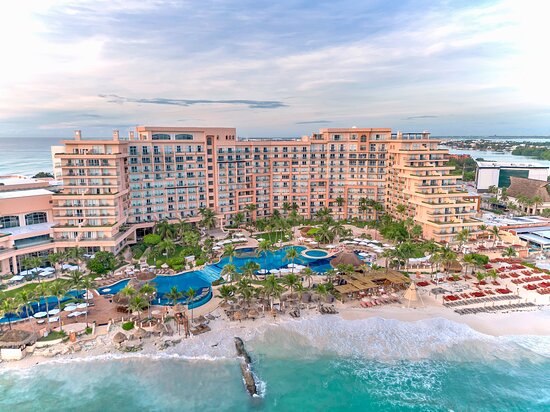
Cancún remains one of the world’s most attractive tourist destinations, with millions of visitors annually and an expanding real estate market thanks to tourism, air connectivity, and projects like the airport expansion. But if you’re thinking about investing for personal vacations, short-term rentals, or appreciation, the key question is: timeshare or direct property purchase? In 2026, with a strong dollar, moderate inflation, and a boom in short-term rentals, the answer depends on your profile: are you looking for cheap personal use or an asset that generates income? Let’s do a realistic analysis with current data.
What is a timeshare and how much does it cost in Cancún today?
A timeshare (or “fixed week” or points) gives you the right to use a unit in a specific resort for one week per year (or equivalent in points). According to qx broker, popular brands in Cancún include Westin Lagunamar, Royal Resorts, Vidanta, or Marriott Vacation Club.
- Initial cost: On the resale market (secondary market), you can find options from $5,000 to $20,000 USD (much less than developer direct prices, which sometimes exceed $30,000–$50,000 USD). In 2026, the resale market is more accessible thanks to platforms like RedWeek or SellMyTimeshareNow.
- Maintenance fees: This is the big “but.” For 2026, annual fees in Cancún average $1,200–$2,000+ USD (or more in premium resorts). Real examples: Westin Lagunamar (1 bedroom) around $1,316–$2,095 annually depending on ownership type; Royal Cancun often $1,000–$1,200 (low maintenance noted in some listings). These fees rise 5–10% per year (based on trends from Vacation Ownership Consultants, Ernst & Young, and recent reports projecting averages exceeding $1,550–$1,600 nationally in 2026), even if you don’t use the week.
Pros:
- Predictable vacations in all-inclusive luxury resorts (pools, private beaches, restaurants).
- Global exchanges (RCI or Interval International) to visit other destinations.
- Lower initial investment than a full property.
Cons:
- Hard to resell (many sell at a loss or not at all; resale value often approaches zero).
- Quotes explains that perpetual rising fees, and you keep paying even if you don’t travel.
- Owner experiences: many report high-pressure sales, difficulty booking desired dates, and a “trap” feeling (frequently mentioned on forums like Quora, Tripadvisor, and owner groups).
In summary: a timeshare can be worth it if you travel a lot to Cancún or use exchanges heavily, but as a pure investment (for income or appreciation), it’s almost never. Most experts see it more as a vacation expense than a financial asset.
And buying a direct property in Cancún? The 2026 landscape
Buying a condo, villa, or apartment (especially for short-term rentals via Airbnb or similar) is a much more solid option in 2026. The real estate market in Cancún and Riviera Maya continues to boom.
- Average prices: An average residential condo is around MXN 4.4 million (~USD 220,000–250,000). In premium areas (Zona Hotelera, Puerto Cancún), it rises to USD 300,000+ (beachfront often $3,000–$4,500 per sqm); in emerging areas (Av. Huayacán, Zona Sur), options start from USD 150,000–200,000.
- Expected appreciation: Projections for 2026 indicate 7–12%+ annual growth in Cancún (sources like TheLatinvestor, SHF reports showing 12.8% in Benito Juárez/Cancún in early 2026; some areas like Puerto Cancún at 15–18%). Top zones: Puerto Cancún, Zona Hotelera (high tourist demand), Av. Huayacán (residential/commercial growth).
- Rental profitability: Well-located, professionally managed properties generate 6–12% gross annual yields (net often 6–9% for STRs in Cancún; vacation rentals outperform long-term). High occupancy thanks to millions of tourists + the FIFA World Cup 2026 boosting the Mexican Caribbean (though main impacts are in U.S. host cities, it drives regional tourism spillover, with strong demand expected).
Pros:
- Real appreciation and potential capital gains (largely dollarized).
- Passive income from short-term or long-term rentals.
- Tangible asset you can use, rent, or sell.
Cons:
- High initial investment.
- Maintenance, taxes, and management costs (more controllable).
- Risks: short-term rental regulations (Quintana Roo requires registration in RETUR-Q, operating licenses, taxes; municipalities like Benito Juárez/Cancún can impose rules/fines up to 100,000 pesos, but still flexible compared to other areas; competition is high).
Quick comparison: timeshare vs. direct property in 2026?
| Aspect | Timeshare | Direct Property |
| Initial Investment | Low–medium ($5k–$30k USD) | High ($150k–$500k+ USD) |
| Annual Fees | $1,200–$2,000+ USD (always rising) | Maintenance ~1–2% of value + taxes |
| Profitability/Income | Low or none (personal use only) | 6–12% gross in vacation rentals |
| Appreciation | Low or negative (hard to resell) | 7–12%+ annual projected |
| Flexibility | Limited (fixed weeks/points) | Total (use, rent, sell) |
| Recommended for… | Frequent vacationer | Investor or use + income |
Conclusion: is it worth it in 2026?
- Timeshare: Only if your priority is guaranteed vacations in Cancún and you don’t mind rising fees. As an investment, no — most owners end up regretting the lack of liquidity and perpetual costs.
- Direct property: Yes, especially if you’re seeking an asset with appreciation and profitability. Cancún in 2026 remains a solid market thanks to tourism, infrastructure (expanded airport), and short-term rental demand. Focus on premium zones (Zona Hotelera, Puerto Cancún) or emerging ones (Av. Huayacán) to maximize returns.
If you’re considering investing, do real numbers: calculate ROI, consult a specialized real estate or financial broker in Quintana Roo, and review legal docs. The Mexican Caribbean isn’t just a beach destination… it can be a smart investment if chosen wisely!